The Great Stay: Why Employees Are No Longer Leaving Jobs and What Employers Must Do Next
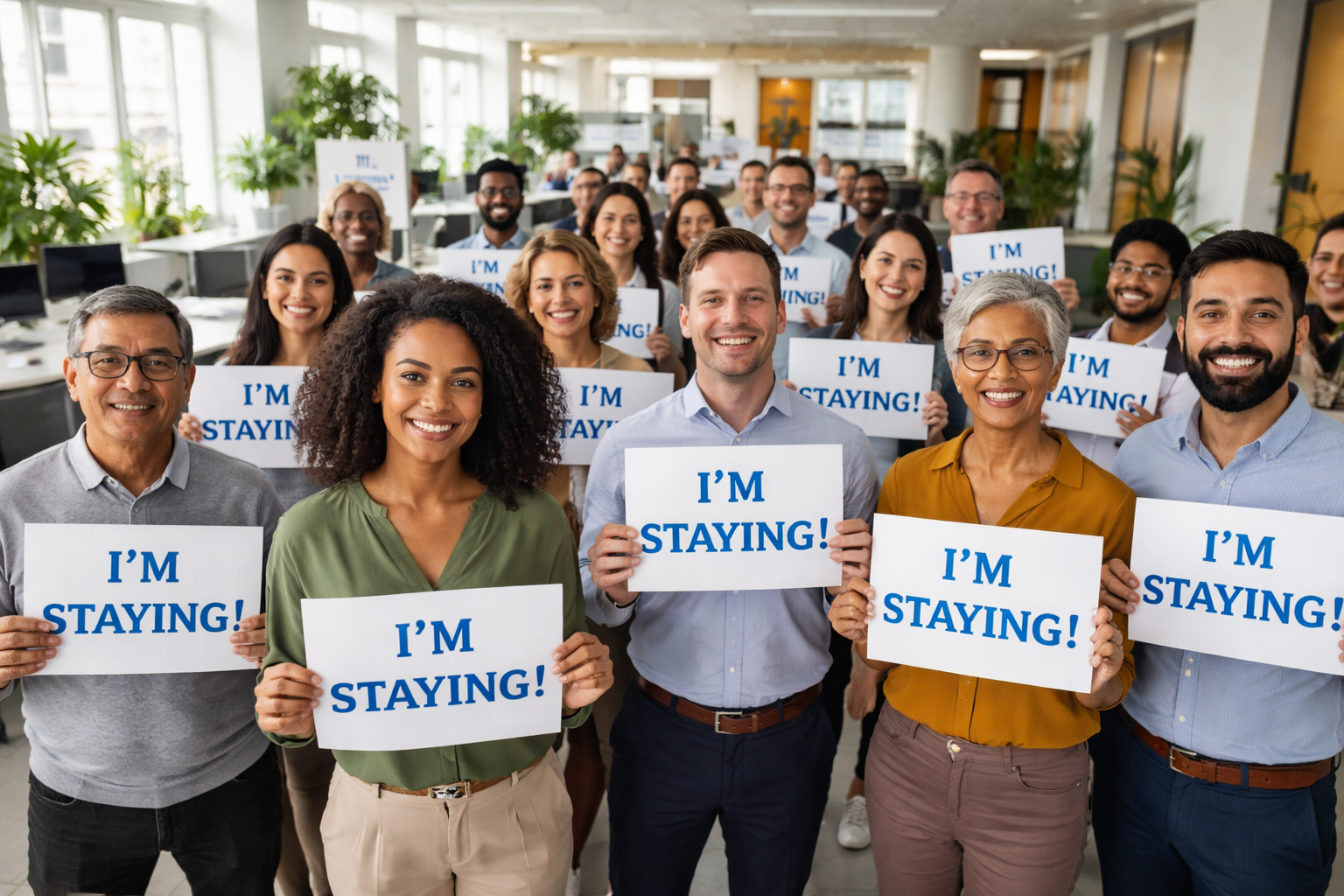
For several years around and subsequent to the COVDI-19 pandemic, the workforce was defined by a historic wave of quits – dubbed The Great Resignation – that reshaped talent strategies, compensation packages, and employee expectations. But as economic conditions evolve, a new trend has taken center stage: “The Great Stay.”
What Is “The Great Stay”?
“The Great Stay” – also referred to as “job hugging” – refers to a widespread drop in voluntary employee turnover. Instead of leaving employers in droves, employees are now staying put at unprecedented rates. Quit rates across industries have returned to pre-2020 levels, voluntary turnover has slowed dramatically, and labor mobility has tightened. As Forbes noted in a recent article, the Global Benefits Attitude Survey has noted that “many employees would rather stick with what (and who) they know” and are turning to their current employers for a sense of security and are now less likely to quit due to:
- Economic uncertainty: Concerns about inflation, interest rates, layoffs, and slower hiring cycles have made employees more cautious. A stable job is now seen as an asset, and many workers are avoiding risky moves.
- Internal Mobility Has Improved: To reduce turnover, many employers have invested in reskilling and upskilling initiatives, internal job postings, career development tracks and leadership development programs With more internal opportunities, workers are opting to grow where they are, reducing the need to look externally.
- Reduced availability of high-paying remote roles: During the Great Resignation, companies aggressively raised salaries and bonuses to attract talent. Today, few high-compensation job offers are available and remote roles have substantially decreased. This creates fewer incentives for employees to leave.
- Organizational stability becoming more valuable: The rapid shifts of 2020–2022 created widespread fatigue. Now, employees view stability and predictability as a form of workplace wellness. Staying put feels safer, easier, and less disruptive. Many companies used the Resignation era to solidify retention strategies by improving parental leave, mental health resources, flexible working schedules and competitive PTO. These factors help anchor employees who may have otherwise left.
What The Great Stay Means for Employers
This marks a dramatic reversal from the post-pandemic period when mobility was high, competition for talent was fierce, and employees felt confident enough to switch roles for better pay, flexibility, or culture. In this article, we explore the drivers behind The Great Stay, what it means for workplace dynamics, and how employers can strategically adapt to retain talent, reduce risk, and maintain compliance. For employers, HR professionals, and legal counsel, this shift presents both opportunities and new compliance challenges.
1. Lower Turnover = Higher Workforce Stability
Reduced attrition helps employers maintain institutional knowledge, decrease recruiting costs, improve team cohesion, and retain trained, high-performing employees. This stability allows organizations to focus on long-term planning instead of constant backfilling.
2. Compliance Risks Shift Toward Retention, Not Recruiting
When employees stay longer, the legal focus changes. Key risks include:
- Pay equity claims
- Promotion discrimination
- Harassment and hostile work environment issues
- Wage and hour compliance
- Long-term leave and accommodation matters
A stable workforce requires robust HR practices, consistent policy enforcement, and regular training.
3. Workforce Stagnation Can Create New Challenges
The Great Stay is not without drawbacks. Reduced turnover can lead to slower innovation, limited advancement opportunities for new or junior employees, increased pay compression and leadership bottlenecks. Employers must counteract stagnation with intentional talent planning and updated job architecture.
Strategies for Employers to Thrive During The Great Stay
1. Double Down on Career Mobility
Workforces stay engaged when they can envision a clear future. Employers should:
- Build transparent promotion pathways
- Offer mentorship programs
- Support skills development
- Encourage lateral mobility
This helps prevent stagnation and decreases long-term turnover risk.
2. Conduct Pay Equity and Pay Compression Audits
With lower turnover, the differences between long-term employees and newer hires can create compression, inequity, morale issues, potential legal exposure, annual or semi-annual audits can identify and resolve disparities early.
3. Refresh Employment Policies (Most Companies Don’t)
Nearly 1 in 5 employers haven’t updated their policies in years, which increases risk. During The Great Stay, businesses should update handbooks:
Employee handbooks and policies are key legal documents when it comes to employment law and ensuring businesses stay compliant. However, these policies do not always provide the protections and guidance employers and employees believe they do. Bringing in an experienced attorney with legal knowledge of employment and business laws can identify gaps in your policies, procedures and handbooks that need updating to provide the protections they were meant to. If a business’s current compliance policies are not actually making the business compliant, they can be fined or face penalties by state regulatory agencies. Some compliance organizations also require a third-party audit to remain certified.
Employers should also revisit remote work policies, refresh harassment and anti-discrimination training and review employer-employee agreements (i.e. separation, confidentiality, hiring) A long-tenured workforce requires clear, current documentation.
4. Invest in Manager Training
Most workplace disputes and litigation can be traced back to poor management decisions. Effective leadership training around: Accommodation, Anti-retaliation, Progressive discipline and having a robust workplace investigation framework to address misconduct can drastically reduce claims.
5. Strengthen Workplace Culture
A workforce that is choosing to stay should not be taken for granted. Culture investments can sustain momentum by encouraging employee voice programs, supporting ERGs, recognizing achievements and building trust across teams. A healthy culture can turn Great Stay behavior into long-term retention.
The Great Stay Is an Opportunity If Employers Seize It Correctly
While The Great Stay reflects economic caution, it also signals a major opportunity for employers. Businesses that invest in loyalty, compliance, culture, and internal mobility will benefit from a highly engaged, stable workforce. Organizations that ignore pay equity, fail to update policies, or overlook leadership training may face long-term legal and cultural risks. Employers who proactively respond to this moment will build stronger workplaces and retain top talent through any economic cycle.